

 by Tom Gurney
Tom Gurney BSc (Hons) is an art history expert with over 20 years experience
Published on June 19, 2020 / Updated on January 11, 2026
Email: tomgurney1@gmail.com / Phone: +44 7429 011000
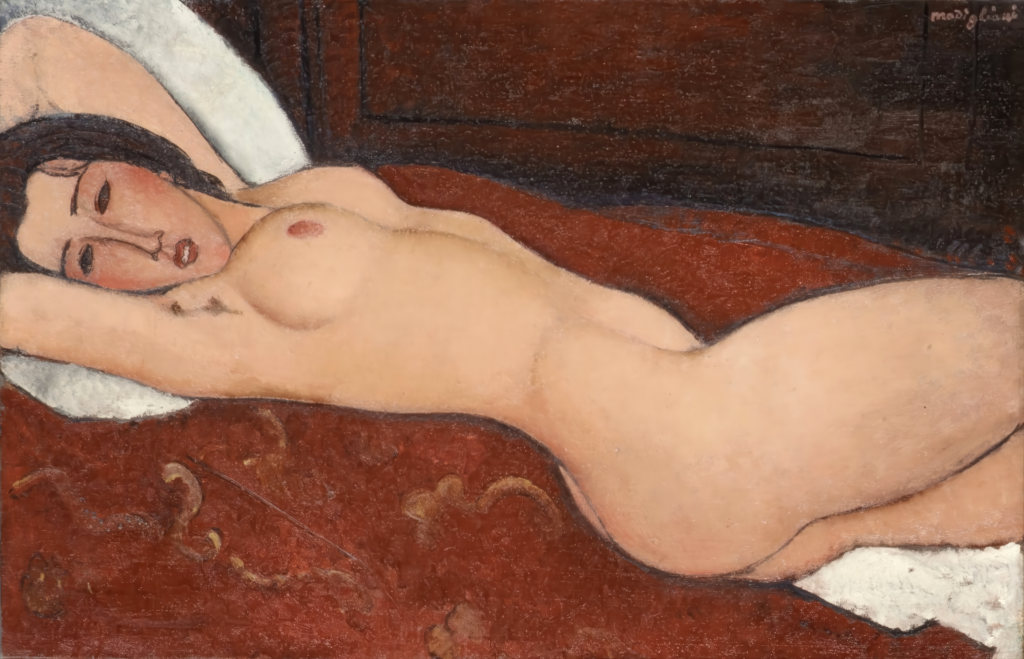
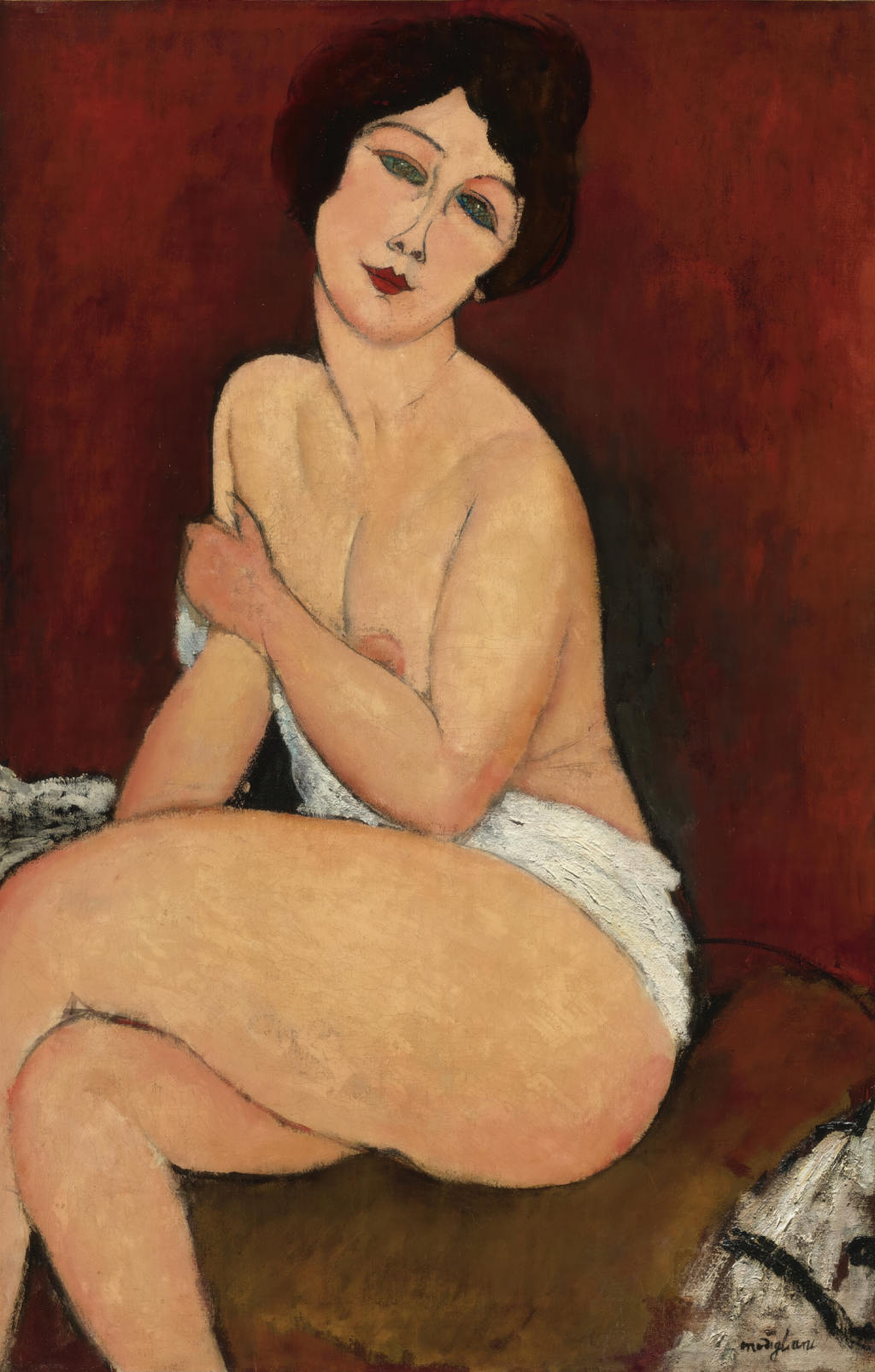
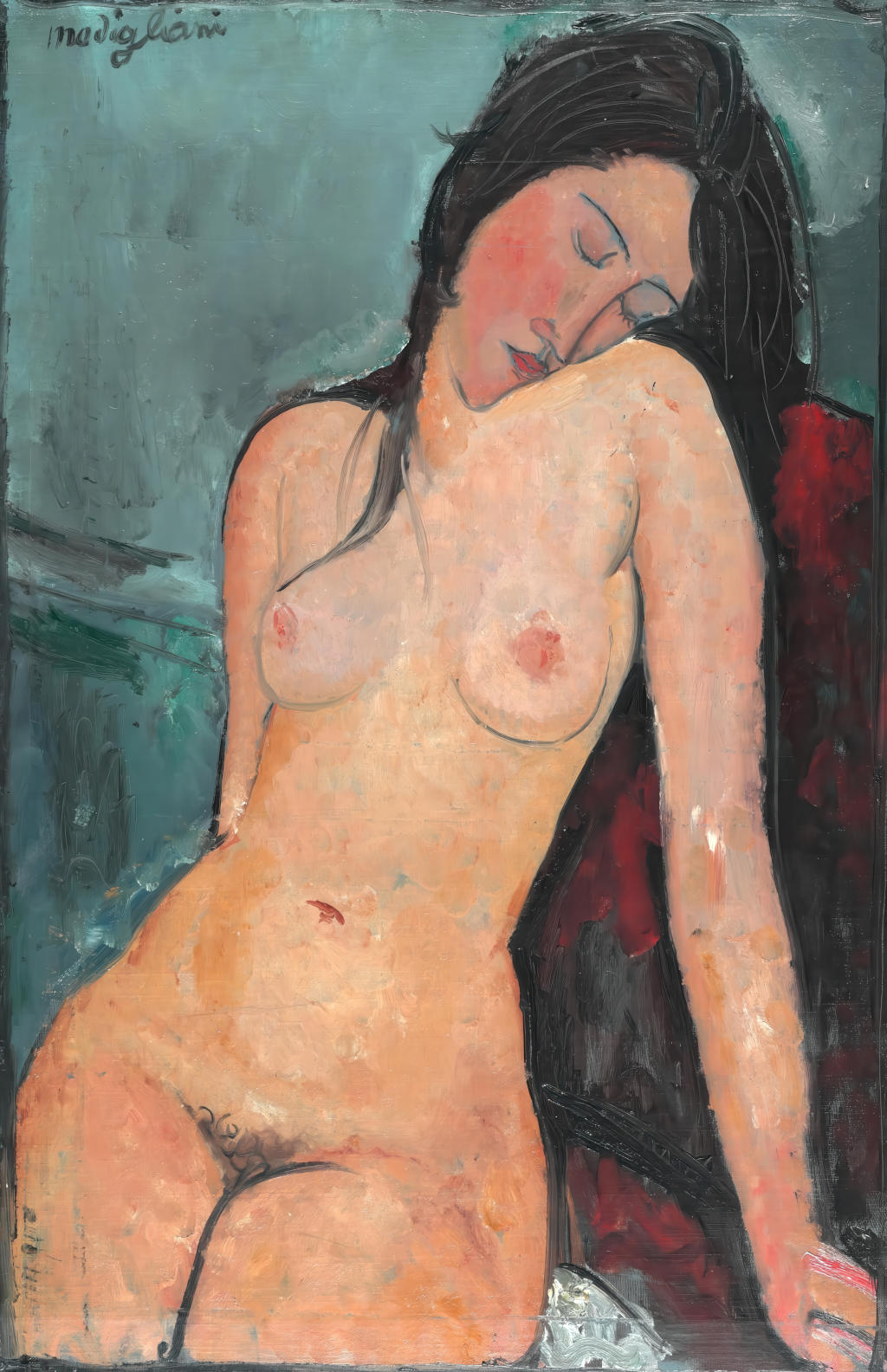
Amedeo Modigliani is most famous for his series of nudes, with Female Nude, 1916 being amongst his best.
This painting represents the artist's early engagement with the female figure. The model appears relaxed, and crucially, the artist does not follow any of the traditional conventions around this niche. Modigliani, in Female Nude, provides honesty and serves the female body to us as is.
The artist was transitioning from sculpture to painting due to his worsening health, and this work marks one of the earliest iterations in this important series. This piece was truly avant-garde, be it in the composition, the way in which detail was built up, and even in the way that he scraped his brush tip across part of the canvas.
This article examines Female Nude, 1916, (sometimes also known as Seated Nude) in detail and also tries to uncover how it led to such controversy, when the nude artistic niche had been accepted for many centuries. There is also information below on the specific sitter for this painting, as Amedeo used a number of different models for his nude series.
Painting Description
The dull, soft green of the underpainting and the background sets the relaxed tone for this languorous nude portrait.
The green can be seen breaking through the cream and pink tones of the model's flesh and the contrasting colours bring the skin tones to life.
The soft green is balanced by a dark, rich red tone to the right, behind her. The paint is applied confidently and with immediacy, the brusque, sharp brush strokes, clearly visible on the surface, imparting texture and enhancing the sensuality of the nude figure.
At a time when what were then known as 'Salon nudes' portrayed characters from mythology or religion in historical or allegorical settings, Modigliani broke with convention by introducing an element of realism.
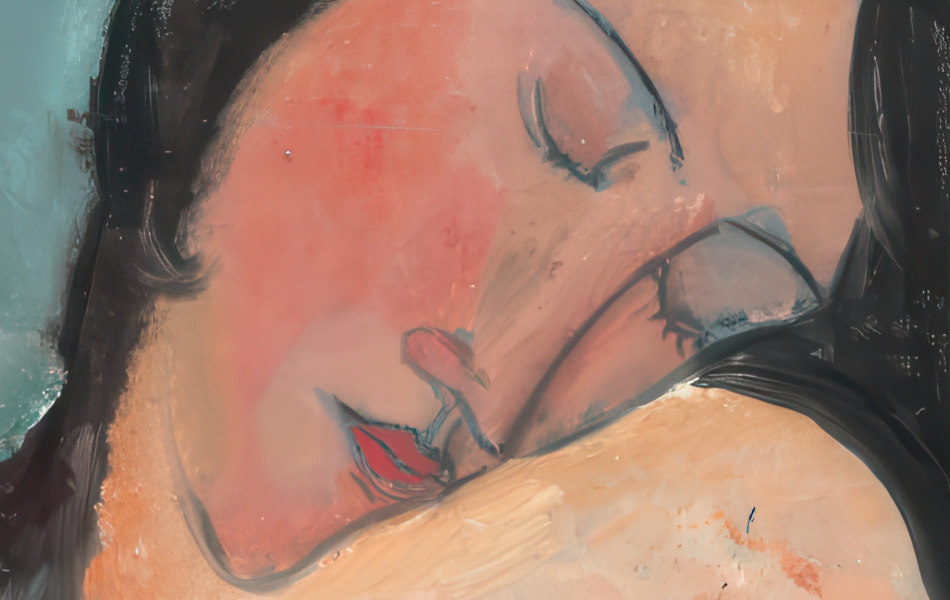
Female Nude (Face Detail), 1916, Amedeo Modigliani
- Artist: Amedeo Modigliani
- Title: Female Nude
- Date: 1916
- Medium: Oil on canvas
- Sitter: Iris Tree or Beatrice Hastings
- Period: Early nude phase
- Style: Modern figurative painting
- Current location: Courtauld Institute of Art, London
Before the Scandal: A Prelude to the Nude Series
Arriving, as it did, in 1916, Female Nude is very close to the start of Modigliani's nude series. It represents his early transition into this genre, and you can track his development over time by comparing this work with those of 1918 and 1919. His work would become bolder, with models pushed closer and closer to the viewer.
The posture here is relatively more relaxed, and the sitter does not look directly at us, but instead down to the floor. Her eyes are in fact closed, and so there is not the atmosphere of his later nude paintings. There is not the same level of confrontation in the piece shown in this page, and so it should have been considered less scandalous than some of his other paintings.
One can argue that this painting is therefore an experimental prelude, where his full confidence has not yet been reached. He focuses more on the anatomical work in this painting, leaving the emotion and atmosphere to grow later in the series.
Can we Identify the Model?
Some published accounts identify the sitter as the English actress and muse Iris Tree, noted in Paris as a model to various avant-garde artists; however, the Courtauld's own documentation notes that the model's identity is not definitively recorded and such identifications remain conjectural. Some sources have also suggested Beatrice Hastings as the model, an English writer, literary critic and poet who once dated the artist.
It appears most likely to have been Iris Tree, who herself was deeply engrained in the bohemian culture of Montparnasse, Paris. She was intelligent, unconventional and artistically ambitious, who was exactly the type of woman who Amedeo was attracted to. She had a charisma which would have drawn in Amedeo, both on a personal level, but also potentially as a model for his work.
Indeed, many of the characteristics reported about her are near identical to what we also know of Beatrice Hastings, who dated Amedeo and also posed for him in other paintings. There is a connection between artist and sitter in this painting, perhaps suggesting they were close personally, but it remains unclear as to who exactly is depicted in Female Nude, 1916, even after research carried out by its present owners.
Who was Iris Tree?
The young woman pictured in this painting may have been Iris Tree, daughter of Sir Herbert Beerbohm Tree, who worked as both an actress and model. At the time of this particular portrait, the depiction of the female form with visible, realistic pubic hair was unheard of.
So controversial was it that the following year, 1917, the police summarily closed an exhibition of his citing indecency.
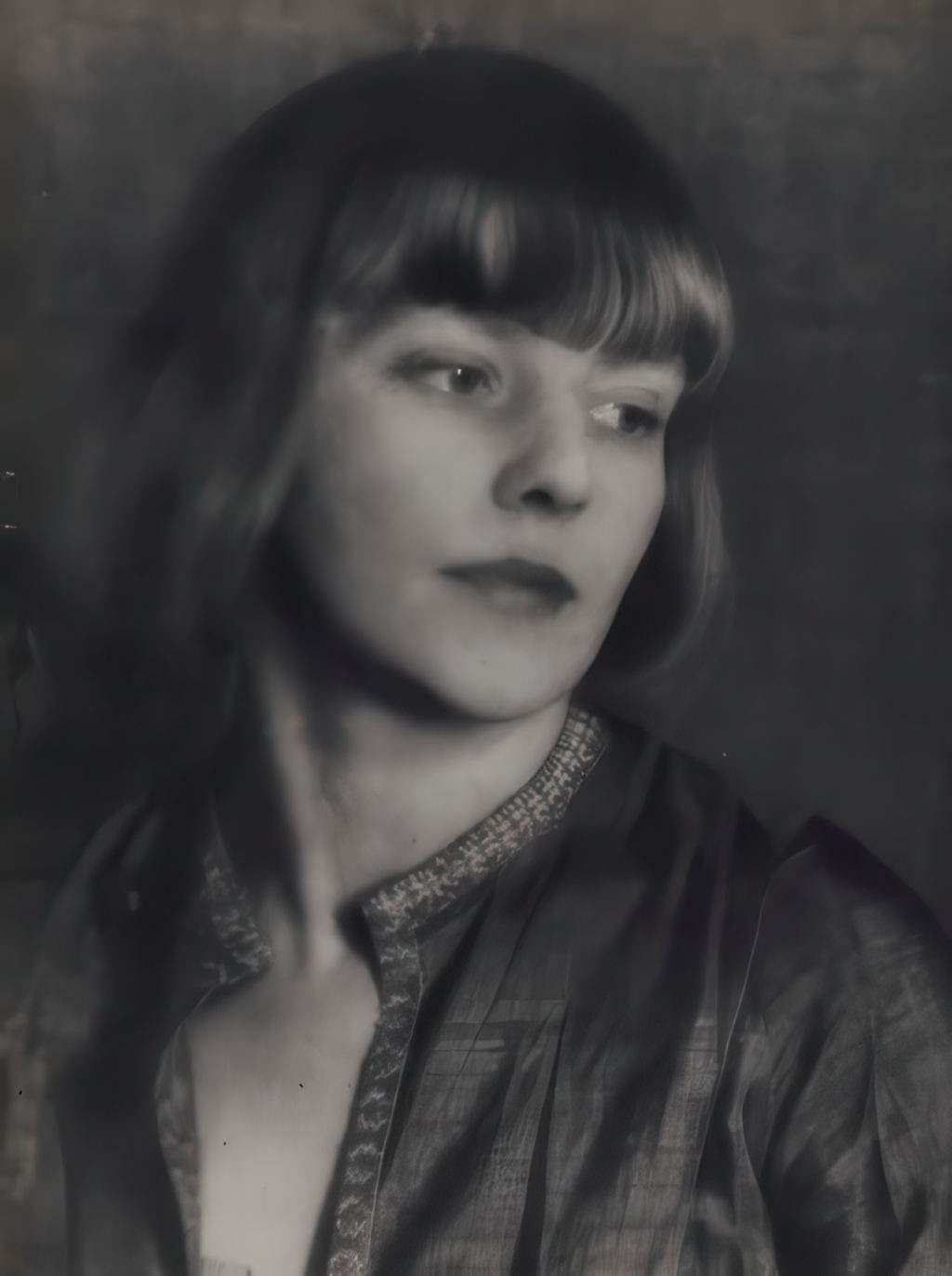
Iris Tree
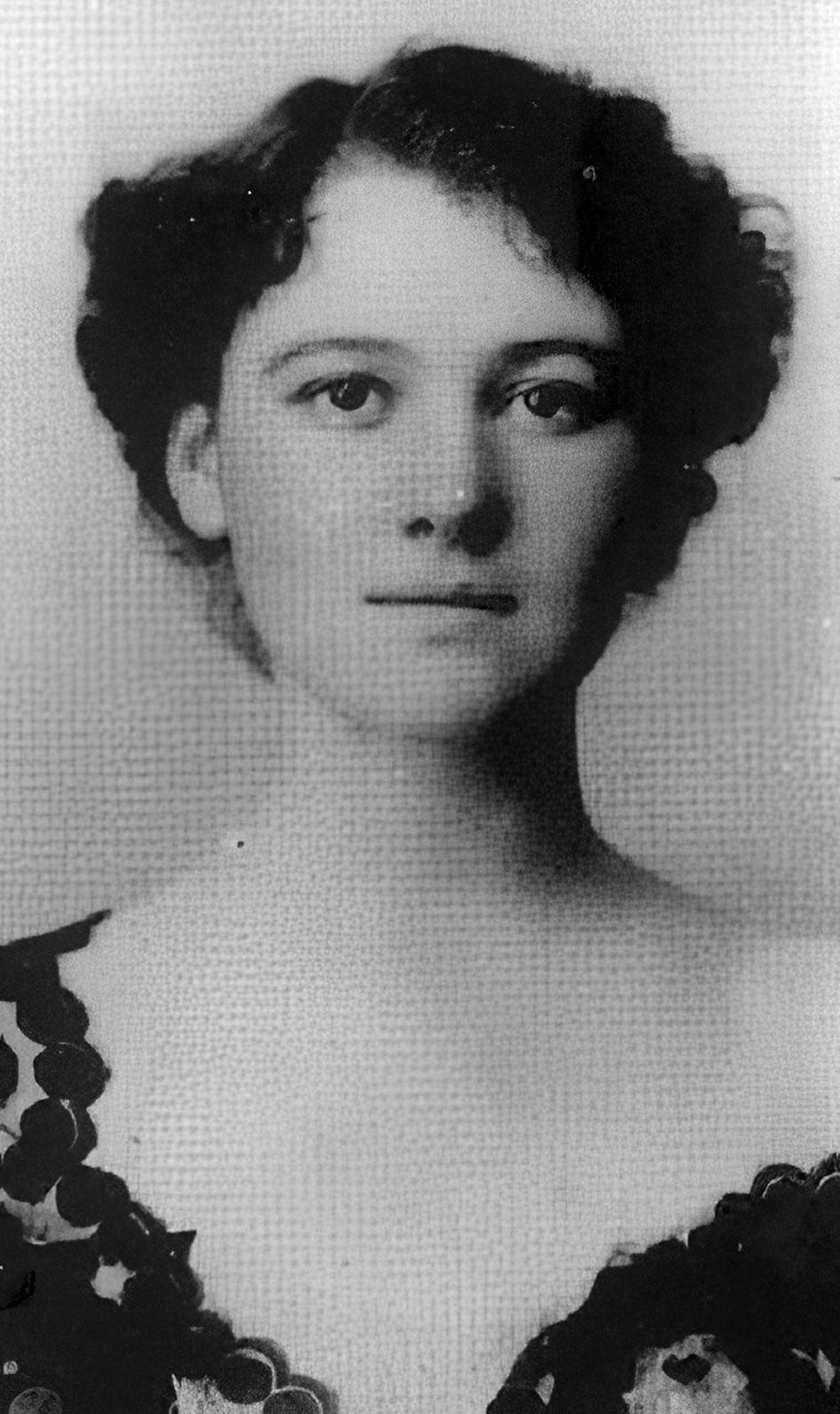
Beatrice Hastings
Technique
The technique is evolving within Female Nude, 1916, with the full method not seen until around two years later. In this piece we see a more subtle use of the elongated limbs. The model is kept further away from the viewer, and everything is just a little more low key. The use of colour and brushwork is consistent with the rest of the series, though, with reduced palette, and a focus more on line and form rather than endless gradients of tone.
Style
Not for him the layers and layers of delicate glazes that made up the smooth polished surfaces of his contemporaries' paintings; he used classical poses but made his subjects real, in fact all too real.
As he did in most of his paintings, Modigliani elongates the face, giving his dozing model a peaceful expression. The influence of both Picasso and Brancusi is apparent in his work. Her eyes are closed, but she does not avoid our gaze. Indeed she seems quite content and unconcerned at being observed.
Artist Overview
Modigliani, born in Livorno in Italy in 1884, spent most of his working life in France and although a large proportion of his early work was sculpture, he is probably best known for his later portraits and figure paintings.
His style of painting was a skilful balance between the classical and the modernist, and although it was not universally sought-after in his lifetime, today his works command millions of pounds at auction. You can see the original painting, Female Nude, at the Courtauld Institute of Art in London.
Location of Female Nude, 1916
Female Nude, 1916, found itself in the entirely appropriate ownership of the Courtauld Institute of Art in London, joining a number of other likeminded artists such as Manet, Cezanne and Degas. Their purchase of this work signified the rise of Modigliani from fringe figure to major artist, but it took some time for him to get there. In his own lifetime, Modigliani struggled financially and could only dream of critical success.
The purchase of this work was not by chance - Modigliani fits smoothly alongside other masters who specialised in capturing the female form, and figurative art more generally. The Institute have long since tracked the rise of modern art, and Modigliani is a key player within that transition - his role is reflected in this painting's prominent position within the gallery.
Provenance
Female Nude, 1916 by Amedeo Modigliani was initially purchased by Léopold Zborowski, who was the Paris dealer who regularly dealt with this artist's work. It would then head to the C. Zamaron Collection, Paris (in 1927), before being taken on by Samuel Courtauld, leading to its inclusion in the Courtauld Institute of Art, London, UK from 1932 onwards.
Address of Gallery
The Courtauld Gallery,
North Wing,
Somerset House,
Strand,
London,
WC2R 0RN
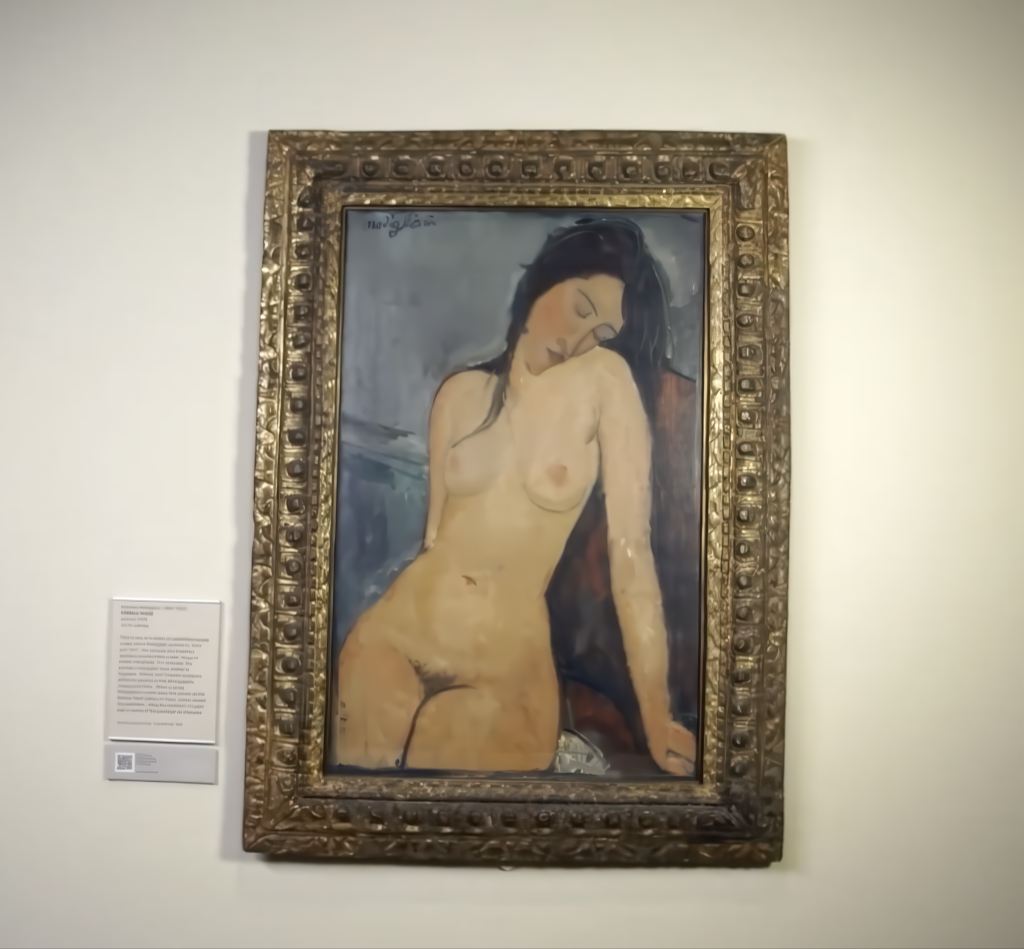
Female Nude, 1916, On Display at the Courtauld Gallery, London
Large Image of the Painting
Female Nude, 1916, Amedeo Modigliani, Courtauld Gallery, London