

 by Tom Gurney
Tom Gurney BSc (Hons) is an art history expert with over 20 years experience
Published on January 1, 2026 / Updated on January 2, 2026
Email: tomgurney1@gmail.com / Phone: +44 7429 011000
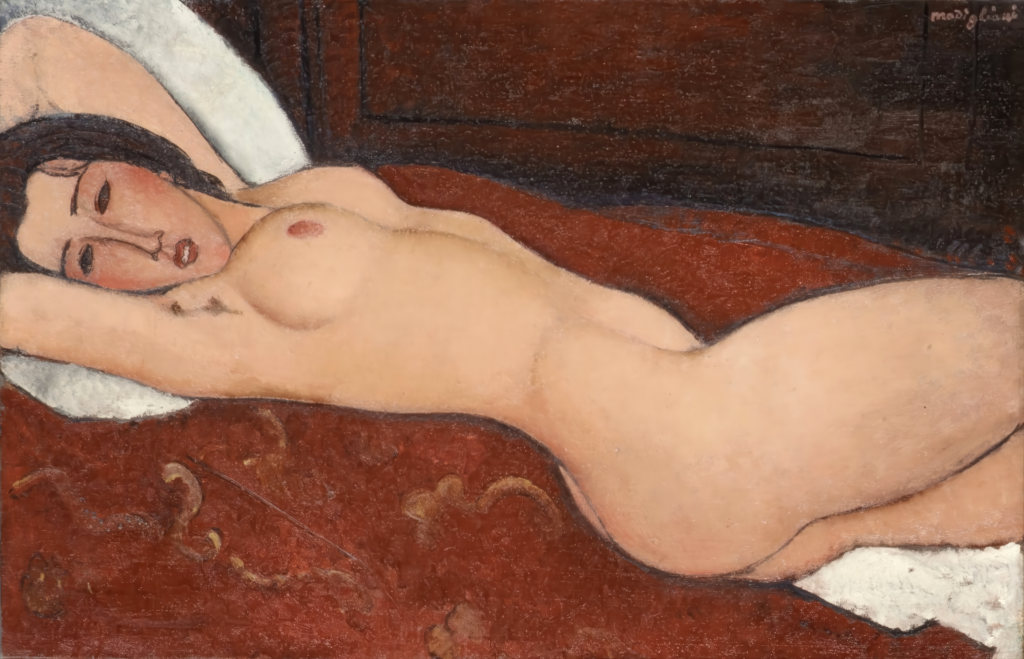
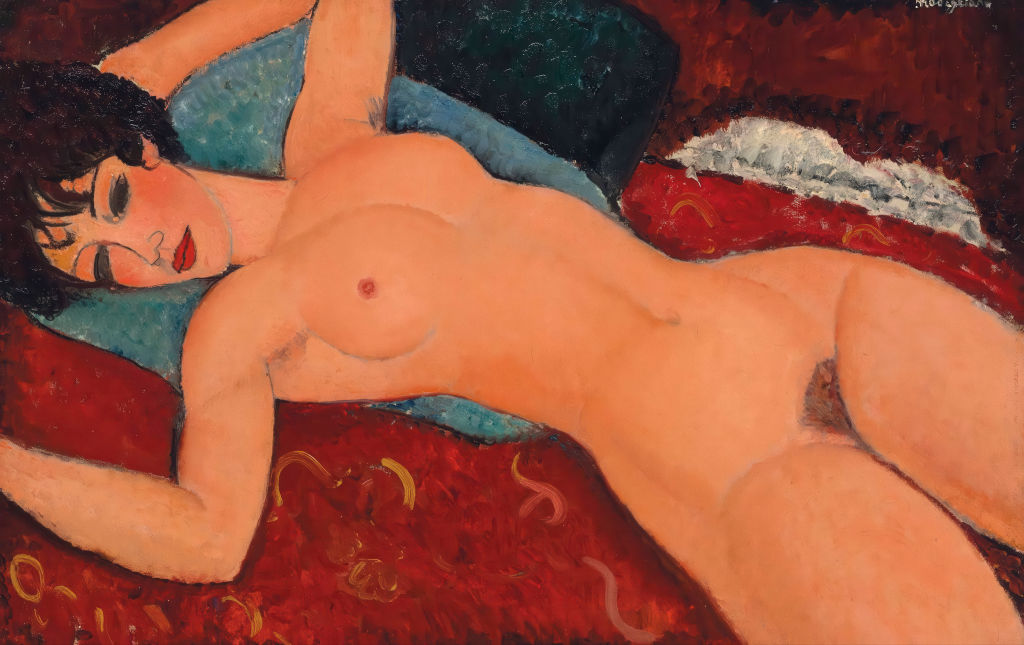
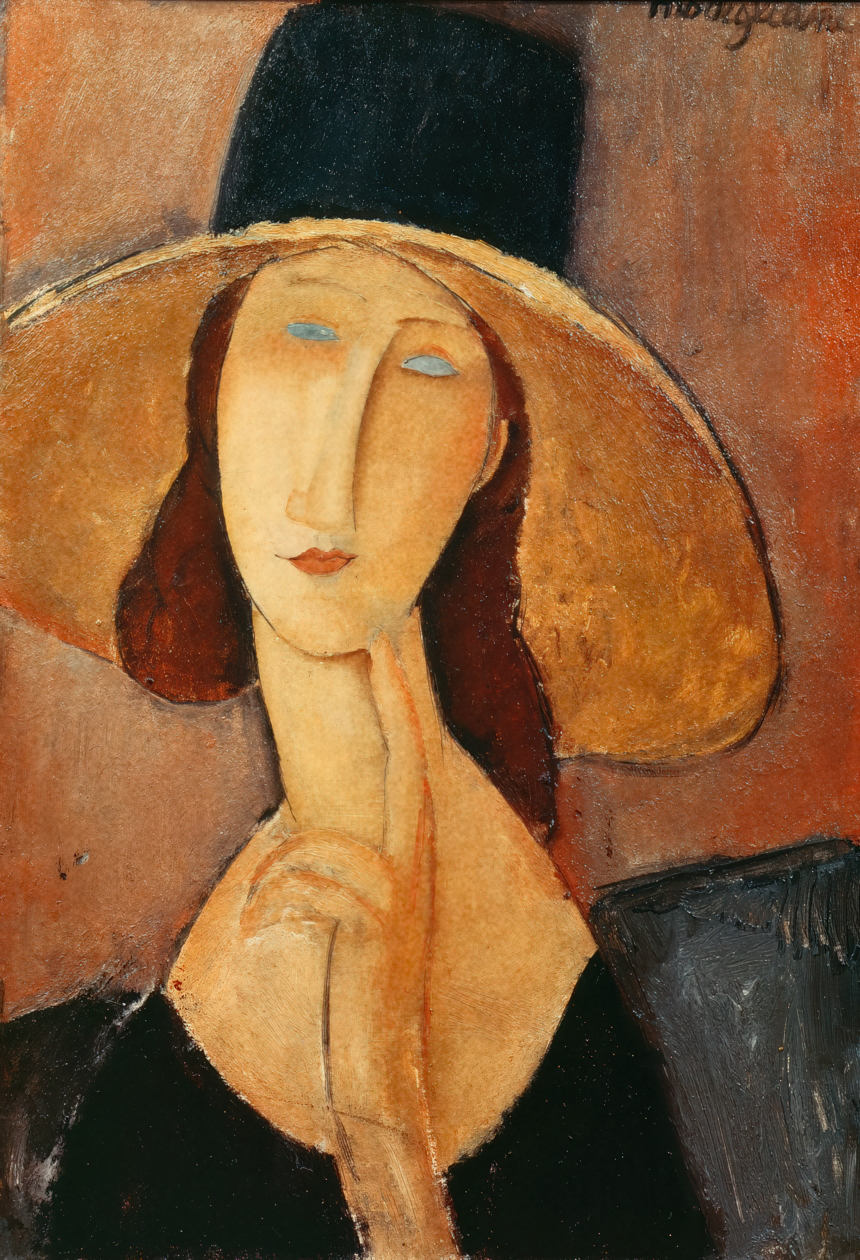
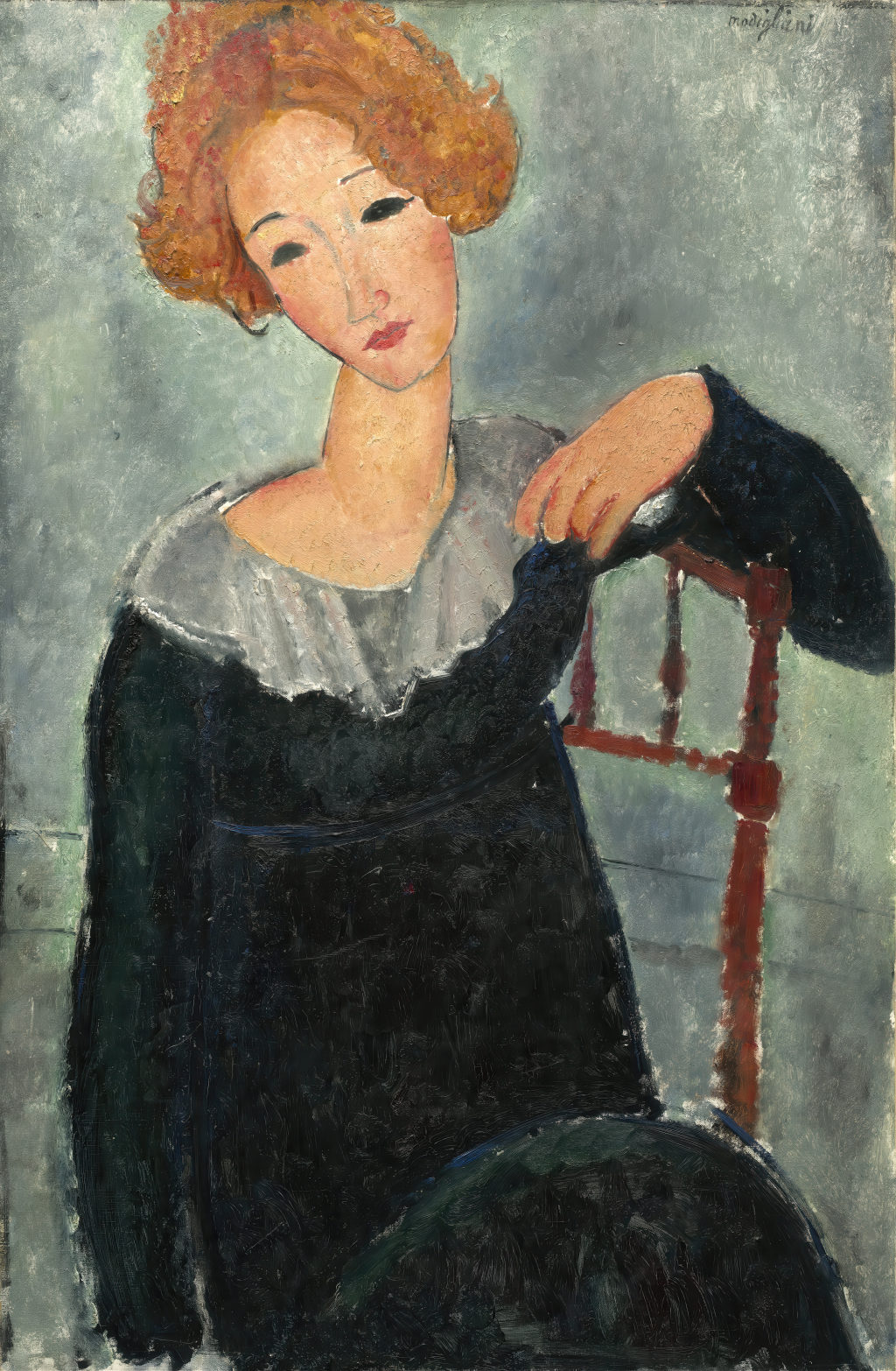
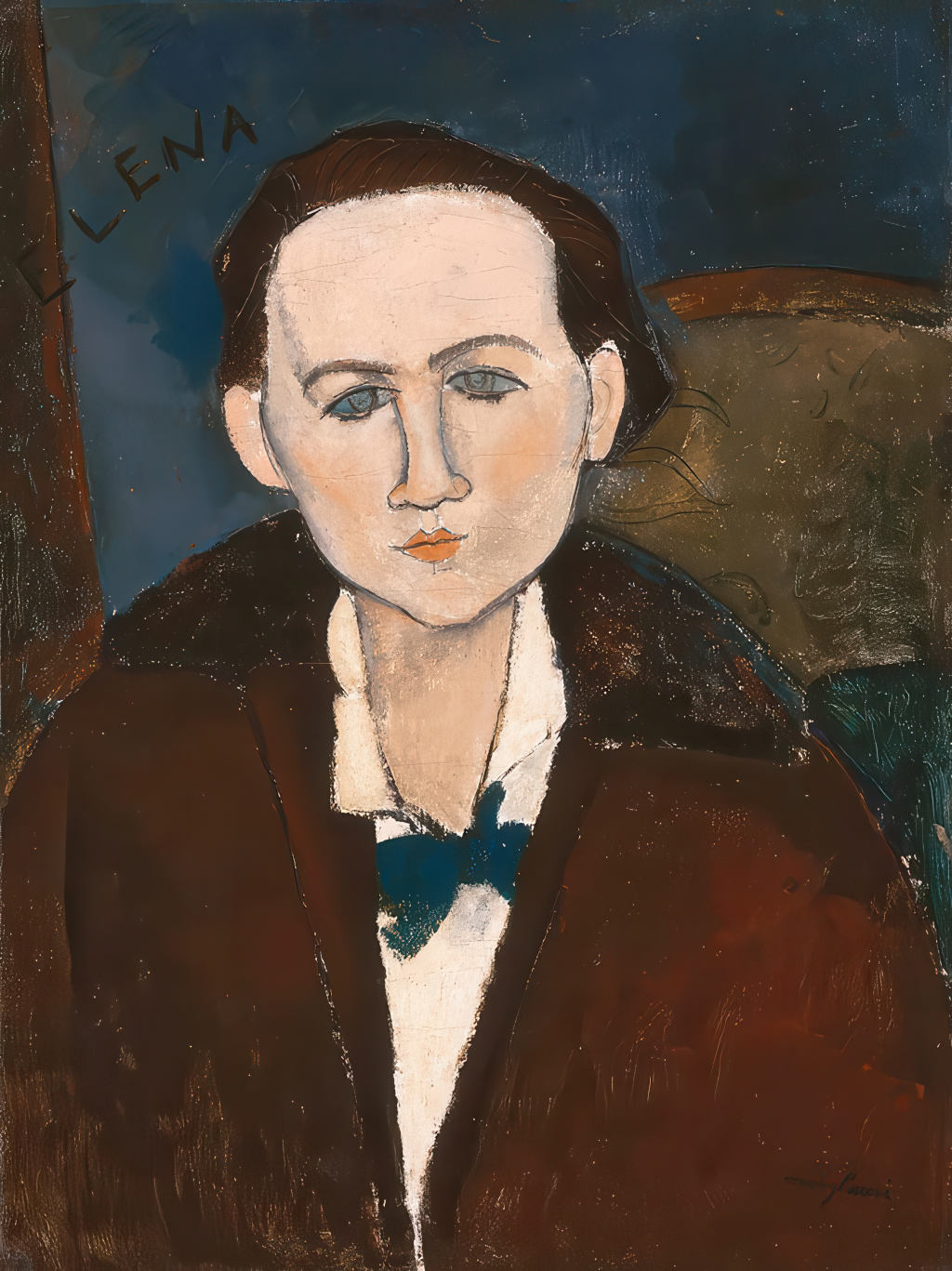
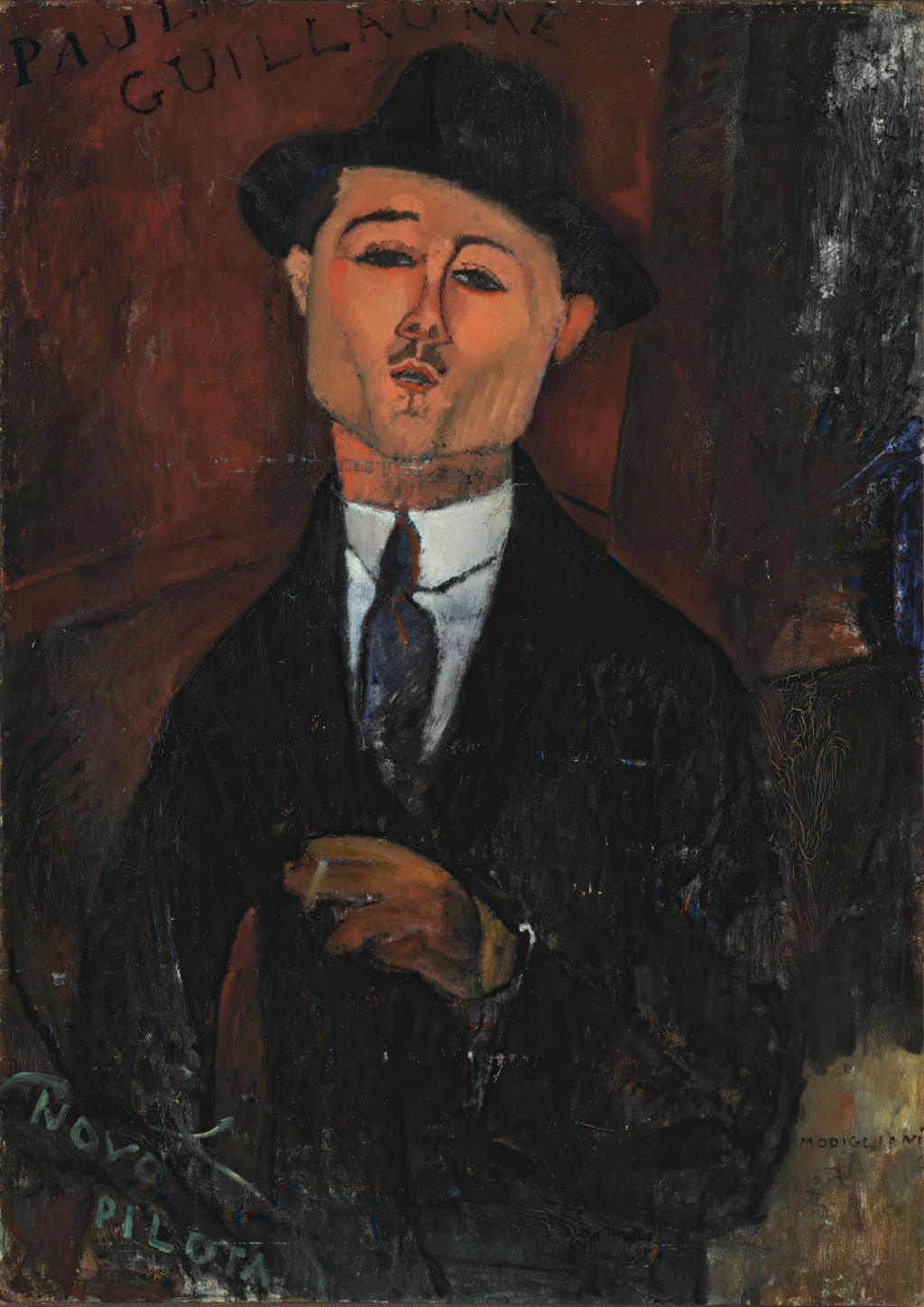
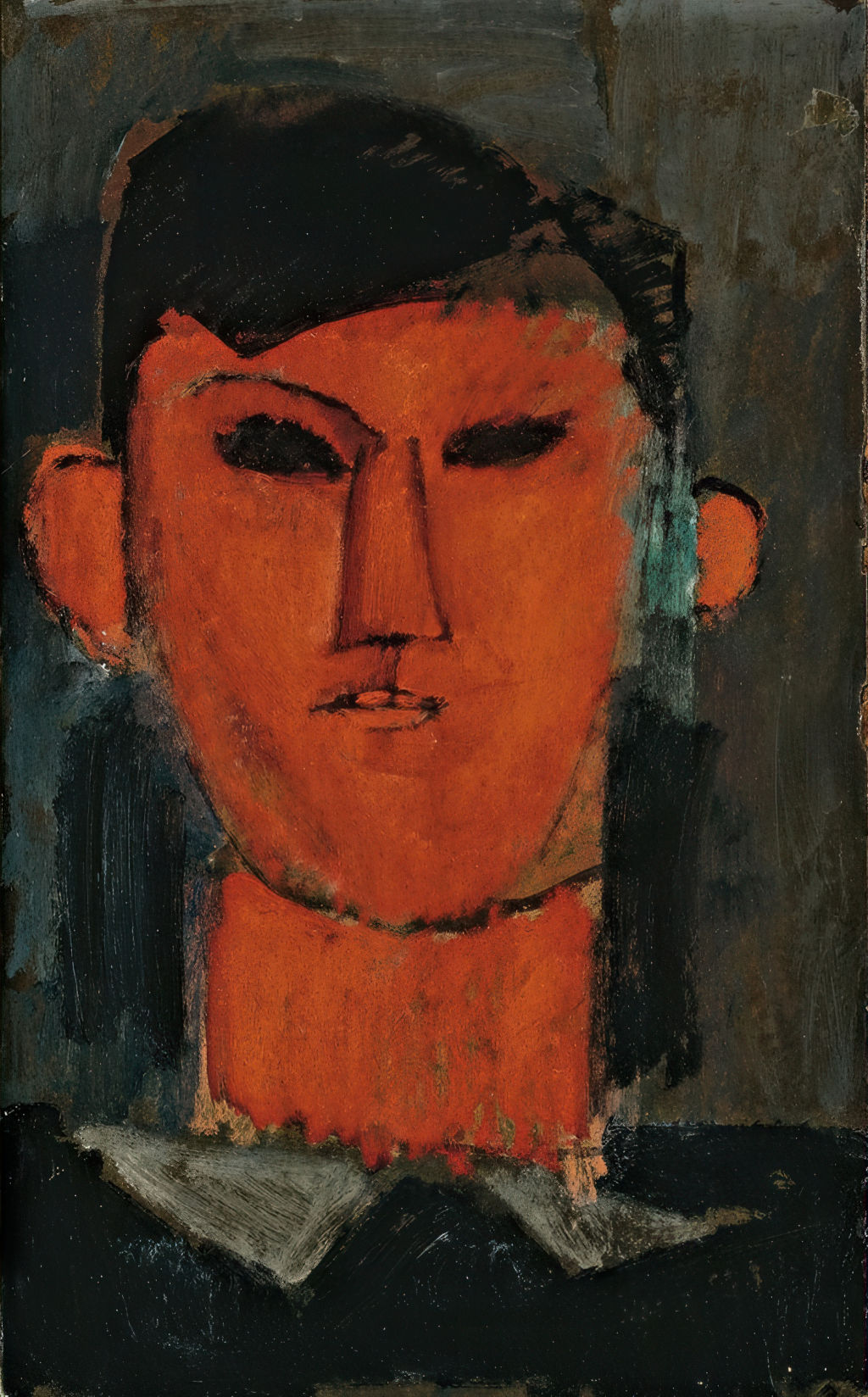
Amedeo Modigliani's drawings are among the most revealing and intimate expressions of his artistic vision.
This artist's work as a draughtsman provided the backbone to his entire oeuvre - with paintings and sculptures forming the rest of his short but highly prolific career. A good proportion of Modigliani's drawings can be presented as finished artworks in their own right, whilst others served as important preparation and experimentation in his understanding of the human body, and how best to depict it.
Modigliani was able to reduce the human body to smooth lines, which perfectly suited his work as a sculptor. Additionally, his drawings could be completed at a brisk speed, without an abundance of detail that others might have strived for. He could make use of pencil, ink, and crayon on paper, sometimes in combination, and most of his paintings would have initial drawings at their core. As with most artists, drawings provide the rawest insight into their preparation, technique and stages of development.
In this section we will examine Modigliani's drawings in detail, covering his working techniques and practices, the mediums that he used, the subjects that he covered and where this discipline fitted into his oeuvre. We will also touch on the influences which lay behind his unique artistic style.
In Modigliani's drawings, line becomes character.
With astonishing economy, he reduced the human figure to its essential rhythm and presence.
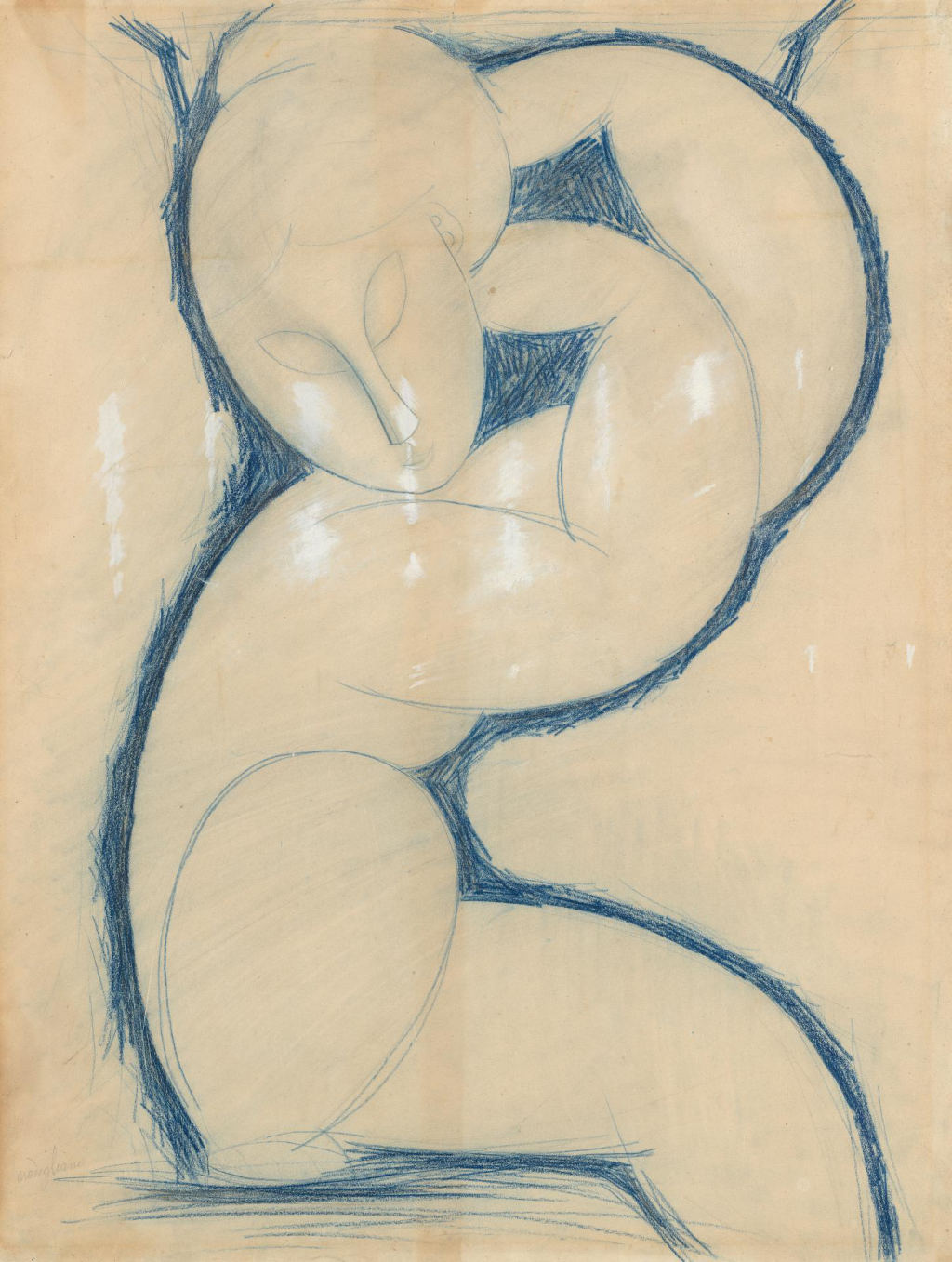
Modigliani Preparatory Caryatid Drawings
- Artist: Amedeo Modigliani
- Title: Modigliani Drawings
- Date: c. 1906-1920
- Medium: Pencil, ink, charcoal, crayon on paper
- Movement: Modern Art / École de Paris
- Key Themes: Elongation, line, human figure, identity
- Related Works: Sculptures, Caryatids, Painted Portraits
Drawing for Money around the Streets of Paris
Modigliani, sadly, struggled for financial freedom throughout his life. At times, he was reduced to sketching portraits of willing subjects in and around the streets of Paris. This is featured at the start of Modi: Three Days on the Wing of Madness, a feature film from 2024. This movie, directed by Johnny Depp, perfectly captures the turbulent life of this troubled, but talented individual.
Amedeo would spend his time in cafés in Paris producing simple pencil sketches of patrons, normally for just a few francs, food or drinks. He became well known in these circles, but not always for his art alone. He sketched endlessly at times in his career, perhaps using it as a means of distraction from his own issues of the mind, just as the likes of Van Gogh would do with their paintings.
Whilst middle and upper class patrons would be the most financially rewarding, Modigliani also sketched his friends and connections frequently too. Pablo Picasso, Diego Rivera and Chaïm Soutine would feature, and in return he would happily pose for them too. Professional models would be too expensive for Amedeo, other than when he was feeling unusually 'flush'. He would protect his artistic integrity by keeping faithful to his style, with elongated forms and reduced features, sometimes upsetting his customers as a result.
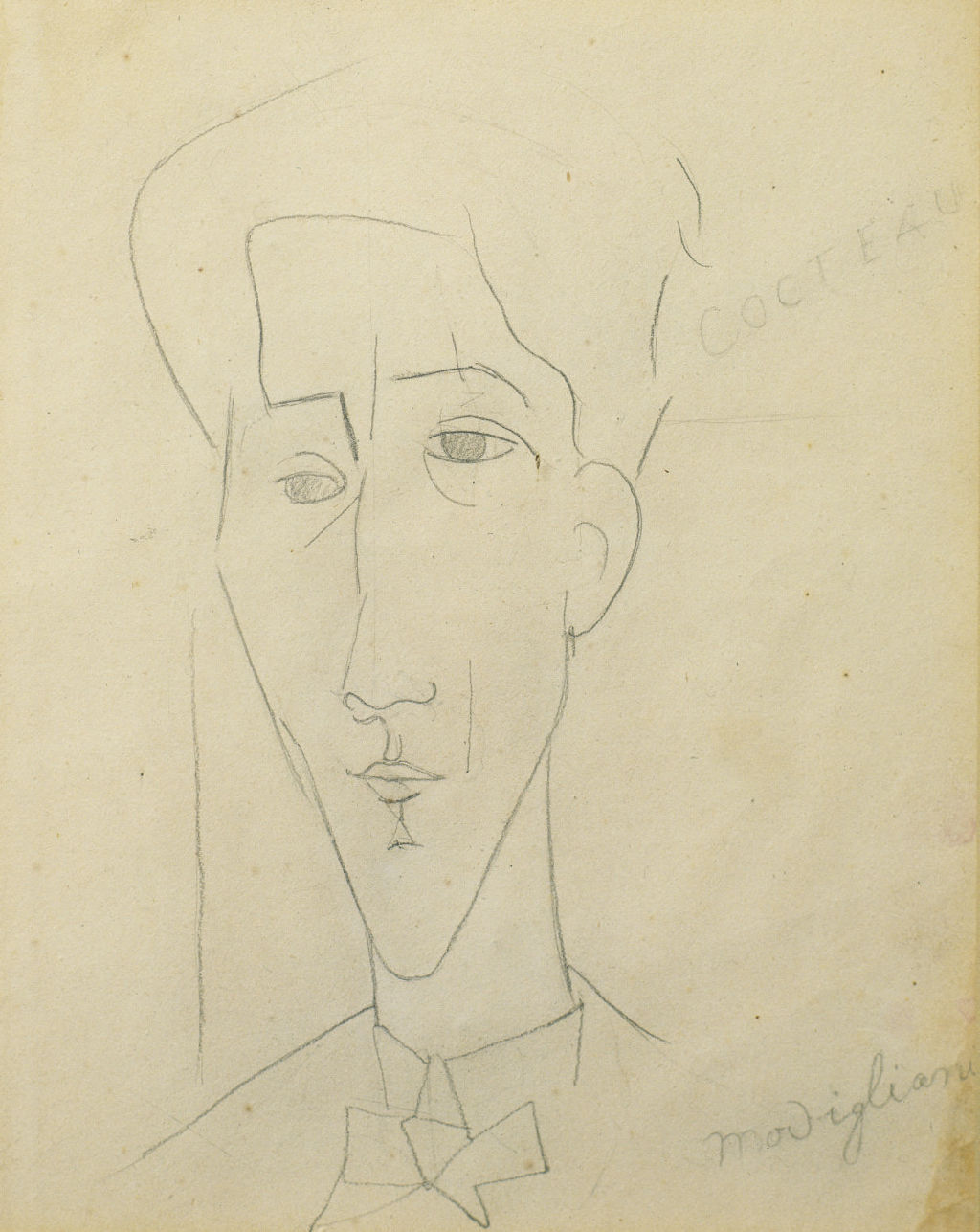
Portrait of Jean Cocteau Graphite on Paper Sketch Amedeo Modigliani
Subjects and Themes
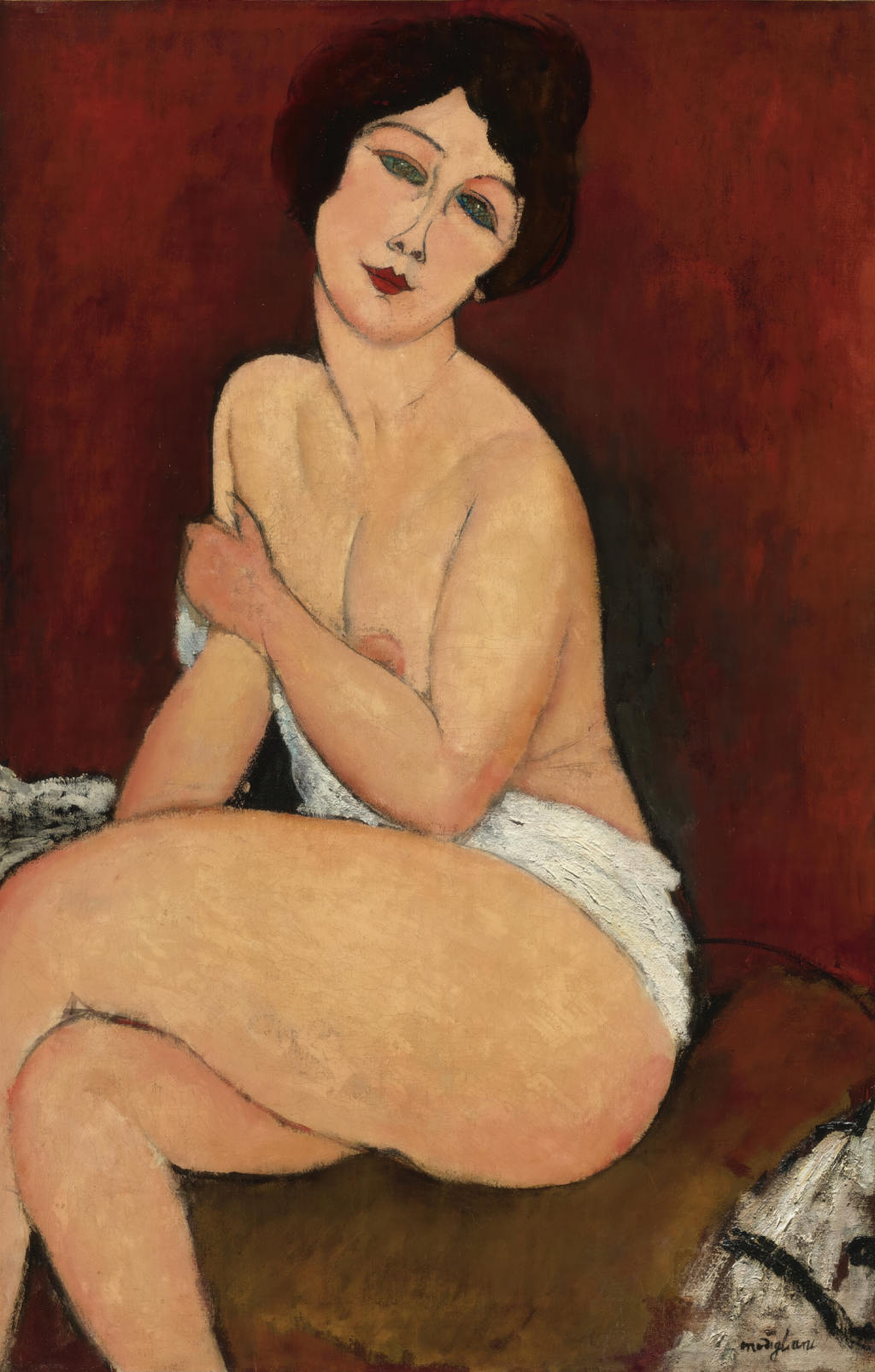
Modigliani's drawings output predominantly focused on the human body, with figurative sketches and shoulder length portraits. His whole 'flow' as an artist was through the curves of the human body. This was his passion, but also helped him to work quickly, without being tied down by endless detail. Of course, nudes feature prominently, and was the more efficient, most direct way for Amedeo to study the outlines of the human body.
Classical sculpture is known to have influenced Modigliani, and we see that in his drawings, with subtle, gentle curves and angles. Most of these drawings are about introspection, considering how the person is within their own mind, which was a subject that provided curiosity to the artist. He would not feature great detail unless he understood their own soul, as he once, famously, explained.
Command of the Line
Modigliani's line drawings were all about reducing the human body to its simplest forms. Not abstraction to the point where it cannot be identified, but rather to study, to learn, and to simplify. Once at this point, the artist could test proportion, gesture, emotional balance and other factors in a similar manner to how Monet would study the effects of light on the same object at different times - it was a hyper focus.
He was an artist who improved through repetition, not going too far beyond his boundaries, but being unique at the same time. This is another example of sculptural concepts within his work of other disciplines, fine-tuning elements as he went. Amedeo was particularly strong-willed and would not be set off course easily, even when financial pressures impacted his progress.
France had traditionally been built on academic practices, including multiple preparatory studies. Whilst Modigliani did complete study drawings for a number of paintings, he mainly worked intuitively, repeating different elements without everything else, all other distractions, stripped away. He sketched frequently, always believing that it would help him discover new forms.
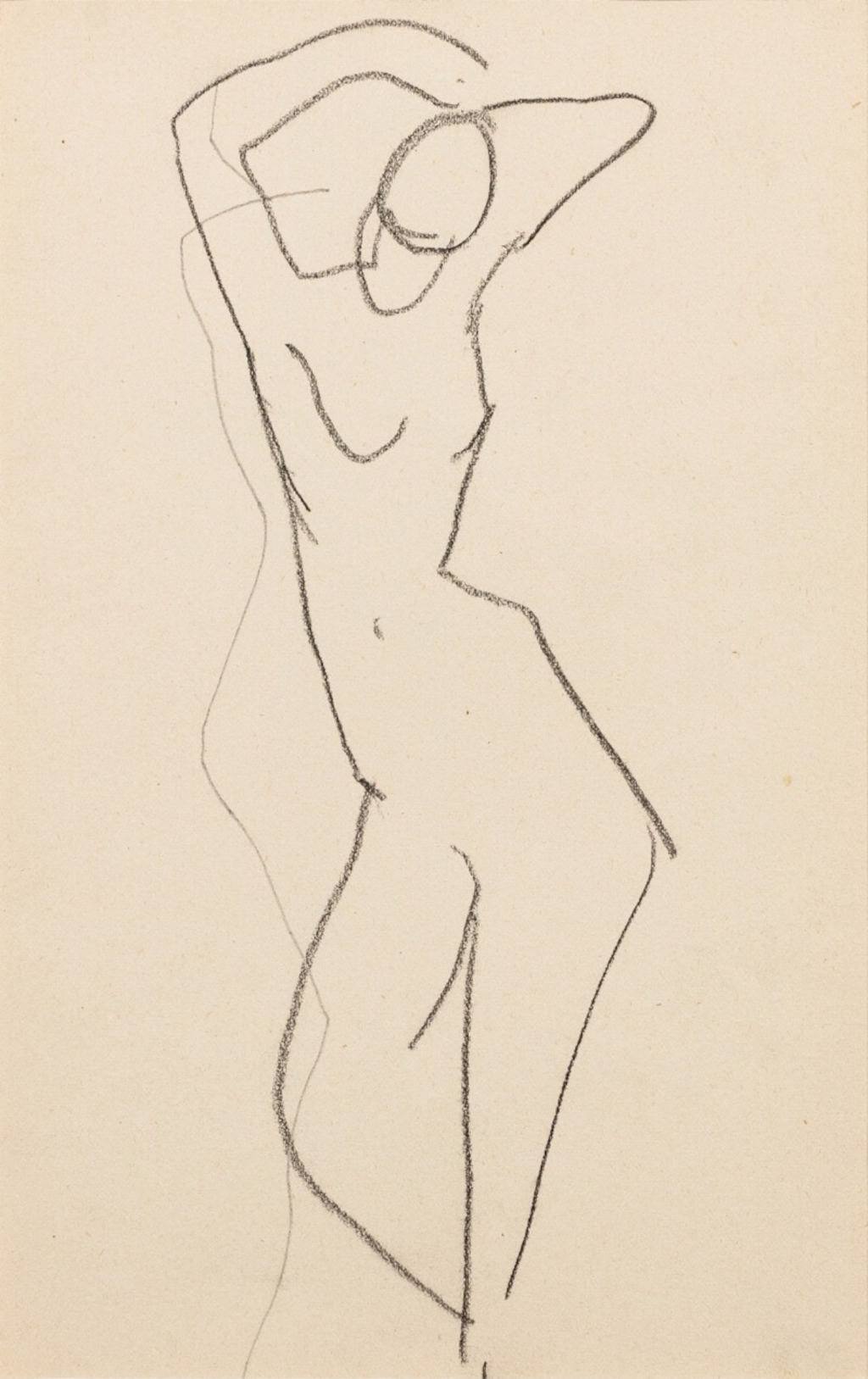
Pencil Sketch of a Standing Female Nude from the Front, Arms above her Head Amedeo Modigliani
Materials and Techniques
Modigliani had his preferences when it came to drawing, pencil being the most common. He did, however, draw obsessively, almost in the same way others would breathe, and sometimes his favourite tools and materials would not be available - and he would have to do with all manner of other options. His career drawings feature pencil, charcoal, ink and crayon, with cheap paper used for most creations.
With money tight for most of his career, Modigliani would often sketch on both sides of his paper sheets, particularly due to some sketches being a minimum of effort for a quick experiment or study. He would also work on the move, in bars, cafes or studios and light paper with simple pencils offered a flexibility in and around the streets of Paris. In truth, anything that could create a line, could be used, for Modigliani was, first and foremost, a line artist.
Modigliani practiced and practiced, and eventually reached the point where he could achieve much with an minimum of work, just a few lines to create form. He may slightly vary pressure and thickness, to help the flow of his drawings, but otherwise would keep most simple. Space would be as important as detail, achieving elegance rather than seeking to impress with endless details.
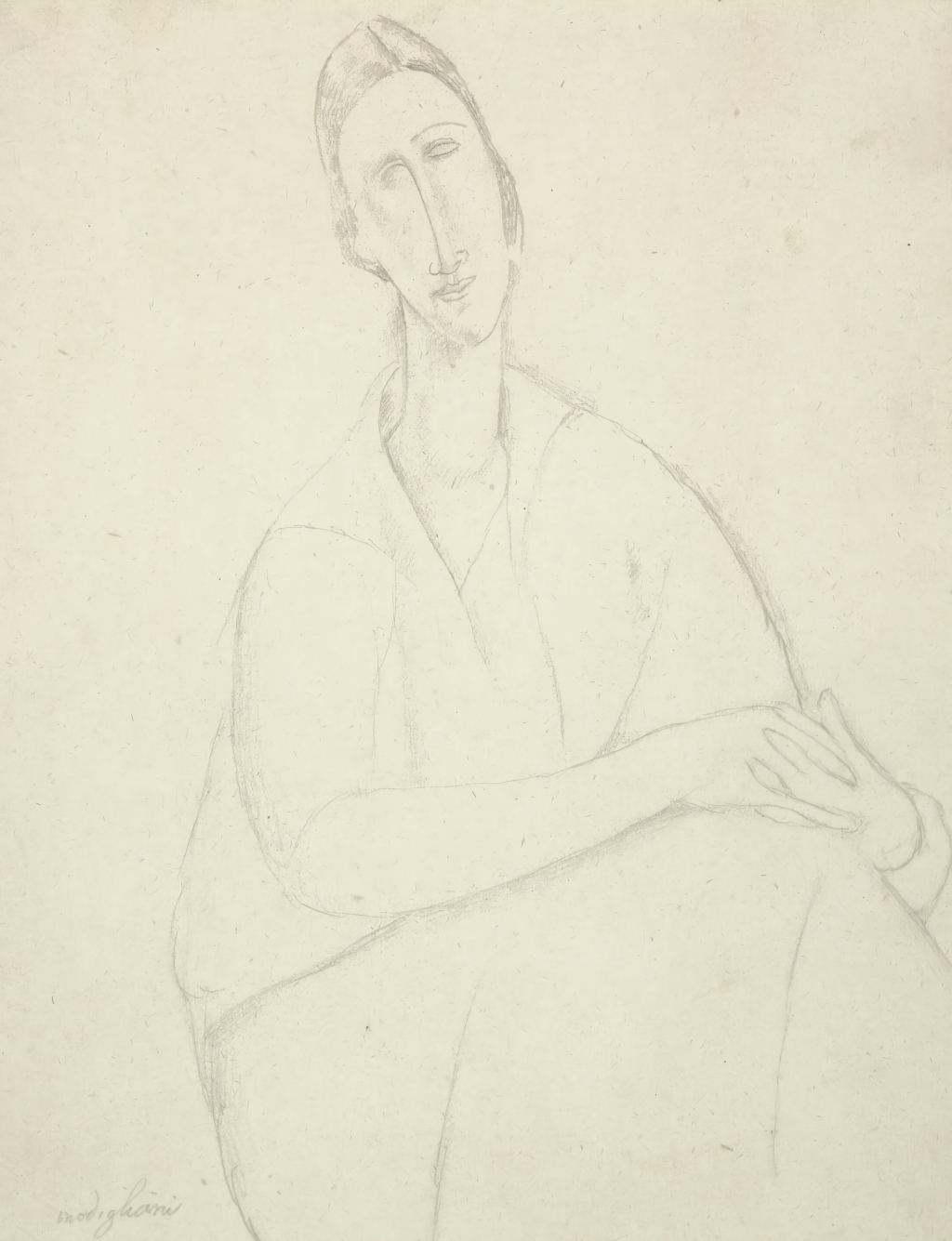
Portrait of Gabrielle Soene Pencil Drawing Modigliani
Caryatids and the Sculptural Vision
Modigliani's most famous drawings tend to come from his caryatid project, where female figures pose as architectural supports. In this case we see sculpture, drawing and even architecture all come together. Again, there is not an incredible amount of detail and the impressive element to them is the use of line. There is influence from Greek sculpture in this series, as well as potentially Egyptian reliefs and African statuary.
Whilst today these drawings can be presented and sold as independent artworks, many were tests for small sculptures. They would also later influence his paintings too, once we was too ill to continue carving stone.
Influences: African Art, Antiquity and Renaissance Line
Whilst influenced by a number of different styles, Modigliani managed to form his own unique approach across drawing, painting and sculpture. He did so by fusing influences together seamlessly, and picking out some more obscure choices, as compared to other European artists in Paris at that time. He was fortunate, too, in being able to access different cultural items in Paris, in private and national collections.
African masks and sculpture plus ancient art brought portraits and sculpture together in his mind. These brought the frontal poses and calm expressions. He then came across the likes of El Greco, and elongated forms, and found a way to bring different elements of these all together in a style which worked. There is no one style which immediately strikes you with Modigliani's work, but a stunning fusion, and that was a part of his success.
Relationship between Modigliani's Drawings, Paintings and Sculptures
The entire oeuvre of Amedeo Modigliani, across all its mediums, is connected stylistically. Both his paintings and sculptures cannot be appreciated without an understanding of his drawings. The same elongated necks, tilted, lengthened heads and reduced facial features are present in all. His drawings are Amedeo at his rawest, with details stripped down to the minimum and it is here that we can see the true artist at work.
Paintings
There are drawings which served as preparation for later paintings, but this was not always the case - far from it. Most were simply practice, without another work in mind. He liked to paint relatively free of restriction, and so would create his forms on canvas as he went. He would start with a subject and a loose flow of the body, and let it develop from there.
Much of his work had been achieved through endless drawing, and so when he went to paint, he already had the human body mastered in his mind, and the rest could come naturally.
Sculptures
Sculptures took energy, and Amedeo was not a healthy man - he was forced to learn and plan his sculptures through drawing, in order to reduce the draining stages of carving at stone. His approach across all mediums was sculptural by nature, and so this process worked effectively. He loved, and found success, with sculpture but ultimately found this work too draining as his health worsened.
Quick sketches also allowed the artist to consider a sculpture from different angles and many line drawings exist where the same African-inspired head is considered from different angles, albeit just from the perspective of flow and outline. Even upon moving away from sculpture, the ideas would persist in his connection of drawings to paintings.
 Drawing, Amedeo Modigliani.jpg)
Tete de Cariatide (Tete de Cariatide) Drawing, Amedeo Modigliani
Critical Reception and Legacy
The artist's drawings are now extremely valuable, but during his own lifetime they were relatively worthless, and would be exchanged for nominal items or favours. He indeed produced portraits for just a few francs at a time, but as his reputation soared after his death, so did all of his artworks, whatever the medium involved. Collectors started to show interest, and experts also started to understand how important a role drawing played in Modigliani's wider career.
Conclusion
In order to truly understand Amedeo Modigliani it is necessary to browse all of his artworks, be it paintings, sculptures and drawings. They are inter-related, influential and significant and he would not have been the same artist without each of them together. His drawings served an important role in occupying his mind, bringing a calmness that he rarely otherwise enjoyed. They also supplemented his income when at his poorest.
Modigliani's drawings also provide a raw insight into his artistic style, when we can understand more about what was important to him, and what inspired his unusual portrait style.
FAQs
References
- Modi: Three Days on the Wing of Madness, 2024, 1h 48m, Directed by Johnny Depp